
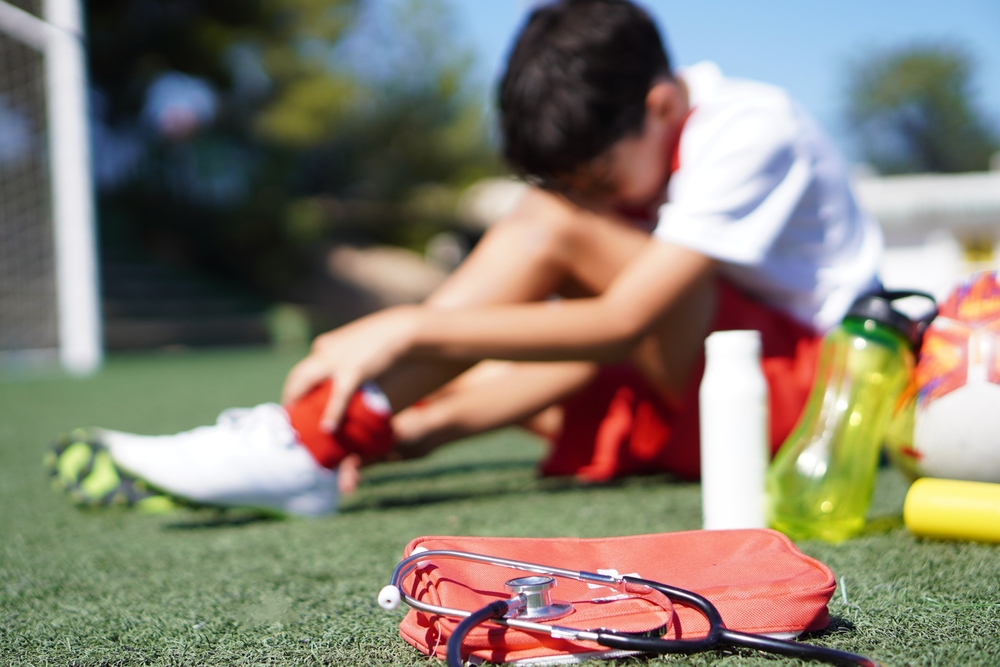
If your child plays sports, you already know how exciting—and sometimes nerve-wracking—it can be. With so many kids participating year-round, staying on top of safety is more important than ever. In fact, in 2023 alone, 27.3 million children and teens were involved in sports or athletic activities. And according to the National Safety Council, 1.1 million injuries were reported among kids ages 5 to 14.
The good news? Many of those injuries can be prevented.
Even though some sports carry more risk than others, injuries can happen in any activity. Interestingly, most injuries—about 62%—actually happen during practice, not games. Yet many parents don’t treat practice with the same level of caution. The CDC estimates that more than half of all youth sports injuries are preventable, which means small changes can make a big difference.
To help parents navigate this, we spoke with Dr. Derek Ochai, a sports medicine expert and orthopedic surgeon based in Arlington, Virginia. With nearly 20 years of experience, he shared practical advice on recognizing injuries and keeping kids safe.
How can you tell if an injury is serious?
It’s not always obvious, but there are some key signs to watch for.
Minor injuries
- Your child can still move the injured area with only mild pain
- They can walk without limping (if it’s a leg injury)
- Pain improves within a few days
- Over-the-counter pain medication helps

Major injuries
- Your child feels pain when putting weight on the limb
- They have difficulty or are unable to move the area
- There is significant swelling
- The pain wakes them up at night
What should you do in an emergency?
The ER is always a safe choice, especially if you’re unsure. But for injuries involving arms or legs during regular office hours, you may be able to go directly to an orthopedic specialist—and often be seen more quickly.
If it feels urgent but not life-threatening, try calling a local orthopedic office first. They can help you decide whether to come in or head to the ER.
What injuries are the most common in youth sports?
In younger children, fractures are common because their bones are still developing and they have open growth plates—which are weak spots that are susceptible to breaking. In older kids and teens, sprains are the most common (ligament injuries).
How can parents help prevent injuries?
A few simple habits go a long way:
- Make sure your child uses proper protective gear, especially in contact sports
- Encourage consistent practice—building skills actually lowers injury risk
- Treat practices just as seriously as games when it comes to safety
Which should you go straight to the ER?
Some situations shouldn’t wait:
- Head injuries, especially with symptoms like dizziness, confusion, ringing in the ears, vision problems or memory loss
- Chest injuries, particularly if your child has trouble breathing
- Serious arm or leg injuries
How should parents react in a serious situation?
First and foremost: don’t panic.
- For arm or leg injuries with visible deformity, gently stabilize the area with a towel or makeshift splint and head to the ER
- If possible, call your orthopedic doctor on the way—they may direct you to their office instead
- For head or neck injuries where your child can’t move, do not move them—call 911 immediately and stay with them
Are some sports riskier than others?
Injuries can happen in any sport, but higher rates are often seen in soccer, basketball, football, gymnastics and cheerleading. Still, no activity is completely risk-free—injuries are simply part of sports.
What should every parent keep in a basic first aid kit?
It doesn’t have to be complicated. A few essentials include:
- Band-Aids
- Ice packs (instant ones are especially handy)
- Antibiotic ointment like Neosporin
- Athletic tape
Youth sports offer incredible benefits—teamwork, confidence and physical activity—but safety should always come first. By knowing what to look for and how to respond, you can help your child stay healthy and enjoy the game.