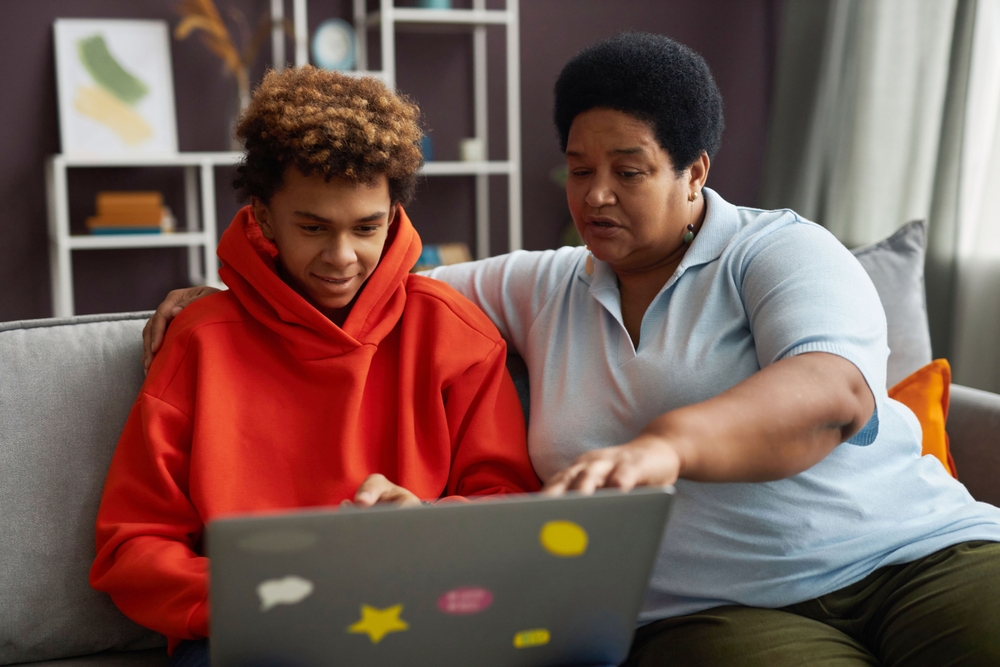
Daniela, a mother in Morrisville, N.C., often finds herself thinking about how her high school freshman uses technology. Every parent faces different concerns. For some, it’s stranger danger; for others, it’s the daily battle over screen time.
Daniela focuses on her son’s online safety. She often questions how much access strangers have to his social media, particularly because anyone—even someone he didn’t know or wasn’t connected to—could respond to posts and videos on his public account. She also keeps an eye on how much time he spends online, concerned that excessive technology use could interfere with other parts of his life and lead to consequences she can’t yet see.
Daniela’s concerns mirror broader national trends. While digital platforms can foster creativity, enhance learning and build essential communication skills, they also present potential risks. On social media, young people can become targets of cyberbullying, privacy threats and predatory behavior. And according to a Surgeon General’s Advisory, studies have shown that adolescents who spend more than three hours a day on social media may face double the risk of experiencing poor mental health outcomes. In a 2024 Pew Research Center Study, 45% of teens say they spend too much time on social media—up from just 27% two years earlier.
Seeking Guidance on Online Safety
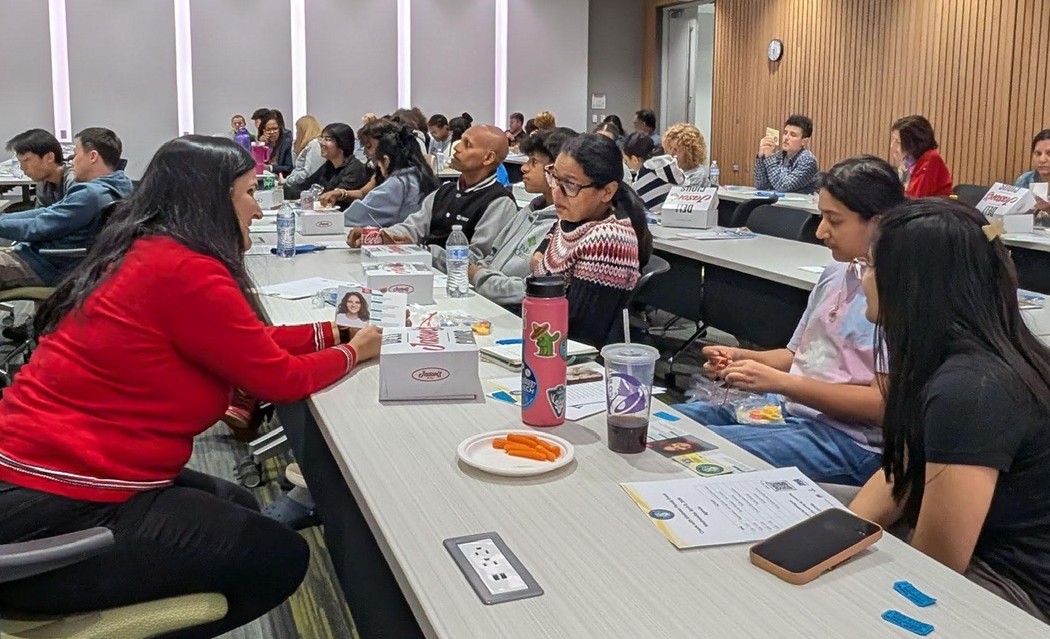
Seeking guidance, Daniela and her son attended a PTA Connected Program at her son’s high school. The event increased Daniela’s awareness of technology risks and safety settings, showing her how to restrict post comments to trusted connections and set up automated screen-time reminders for bedtime. In fact, 95% of respondents from similar programs on digital safety reported that they were more likely to use tools, like the ones mentioned by PTA Connected, to protect their online safety/privacy after participating.
“I think from the program, my son became a little more aware that technology addiction is serious and there should be strict time limits, so you don’t fall into that pattern,” said Daniela.
The idea of “tech overuse”—or even simply finding a healthy balance between social media, gaming and computers—is relatively new territory for parents. Gen X and Millennial parents grew up in a world where technology was something you went to—the family computer in the den, the television in the living room, the video game console after school. They could walk away from it. They could turn it off.
Today, a child can carry a miniature computer in their pocket that connects them instantly to friends, entertainment, games, information and the wider world. And that creates a parenting question previous generations rarely had to answer:

How do you know when “a lot” has become too much?
The answer isn’t necessarily found in a particular number of hours. It may be found in what technology is beginning to replace—sleep, schoolwork, physical activity, family time, friendships or simply the ability to be bored.
For parents, the challenge is not just setting limits. It is learning to recognize the difference between a child who enjoys technology and a child whose life is increasingly organized around it.
For Daniela, school events can offer something that is easy to overlook in the conversation about technology—community. They give parents and caregivers a chance to talk about what their children are experiencing, compare approaches and learn from one another.
There may not be a single answer to finding the right balance with technology, but knowing that other families are navigating the same questions can make the challenge feel a little less daunting.
“A sense of community makes you feel that you’re not struggling alone, and you also get ideas when you talk to people about what they do to lessen the time that their kids spend in front of the computer.”
School Programs Build Community
Eager to learn more about programs like this one? Visit PTA.org/Programs for more free family resources on digital safety, STEM, arts education and healthy lifestyles, including programs you can bring to your school community.