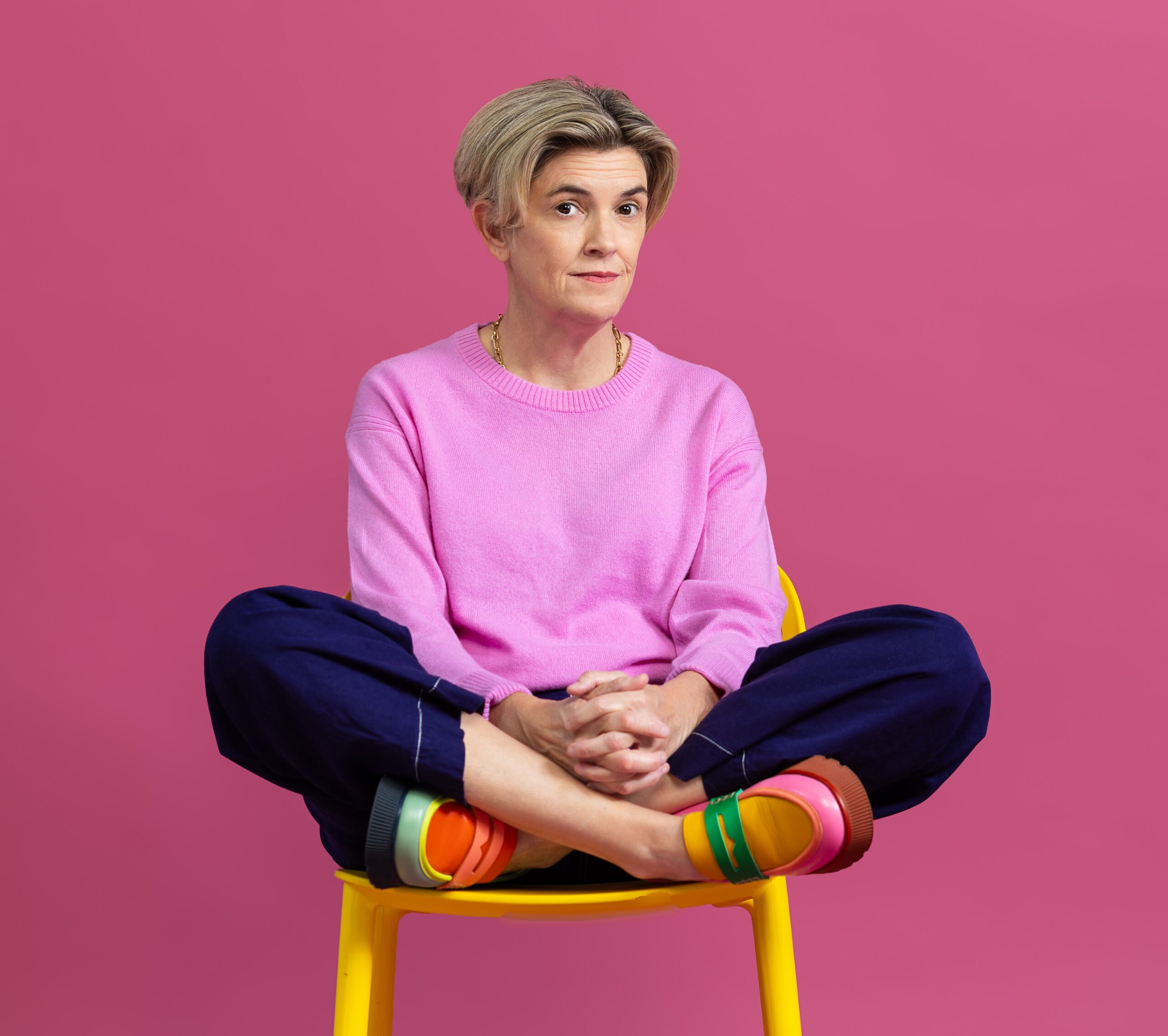
Jere Chang has spent over 20 years as a classroom teacher in the Atlanta area, bringing passion, curiosity, and heart to her work every day. Beyond the classroom, she’s built a vibrant online community of 3.5 million followers, where “Ms. Chang” shares moments of humor, radical kindness, and real-world inspiration across TikTok, YouTube, Instagram, and Facebook. She is also the author of Becoming the Teacher I Needed: Lessons in Radical Kindness and Resilience. We asked Ms. Chang a few questions about her journey, her work, and the message behind her book.
Tell me about a teacher who had a big impact on you?
I transferred schools my senior year in high school, because I quite literally detested my small-town school, even though I had grown up with my classmates. So much in fact, my parents graduated from the high school I was about to graduate from.
One teacher who had a profound impact on me was Ms. Edwards, my AP English teacher. I didn’t expect that, because by the time I got to her class, I had already decided school just wasn’t for me. I had spent years feeling different. I grew up with spina bifida, and later I was quietly trying to understand my identity as a lesbian in a small conservative town. I didn’t fit in anywhere. Some of my first bullies weren’t even students. They were teachers and coaches. School felt like a place where I was tolerated at best, not celebrated. So I learned to keep my head down, do what I had to do, and count the minutes until the day ended.
Then I walked into Ms. Edwards’ classroom. She didn’t do anything flashy. There wasn’t a grand speech. She simply saw me and believed in me. She noticed when I was quiet. She noticed when I hesitated to participate, because I was not as adept as the other kids in the class. She noticed when I seemed guarded. Instead of interpreting that as disengagement or attitude, she treated it like a story she wanted to understand.
I remember one day she asked me a question, and I gave a short, safe answer. She smiled and said, “I think you have more to say than that.” It wasn’t pushy. It was invitational. For the first time, a teacher wasn’t trying to control me. She was trying to hear me.
Ms. Edwards created a classroom where it felt safe to exist exactly as you were. She celebrated different perspectives. She encouraged humor. She valued kindness. She didn’t just focus on the loudest students or the most compliant ones. She paid attention to the kids on the edges, the ones who were used to blending into the background. Kids like me.
What struck me most was that she rooted for everyone. Not just the high achievers. Not just the easy kids. Everyone. She had this quiet way of making you feel like you mattered, like your presence changed the room in a good way. And when you feel that as a student, it changes everything. You start taking risks. You start speaking up. You start believing you belong.

At the time, I didn’t realize it, but Ms. Edwards was planting a seed. Years later, when I found myself in a classroom as a teacher, struggling and questioning everything, I kept coming back to her. I thought about how she made me feel. I thought about how she saw me when I felt invisible. And I realized that’s the kind of teacher I wanted to be.
I didn’t become a teacher because I loved school. I became a teacher because of people like Ms. Edwards who showed me what school could be. She didn’t just teach content. She changed my understanding of belonging. And now, every day, I try to be that teacher. The one who roots for the kid who doesn’t fit in. The one who celebrates differences. The one who sees students not as problems to fix, but as people to believe in.
Ms. Edwards didn’t just impact my life. She shaped the teacher I became.
What are the challenges facing teachers these days?
One of the biggest challenges facing teachers today is that the job has expanded far beyond teaching. Teachers are expected to be educators, counselors, behavior specialists, data analysts, family liaisons, and often emotional support systems for students. At the same time, we’re navigating increased academic expectations, constant policy changes, and pressure tied to testing and performance. It can feel like you’re being pulled in ten different directions while still trying to create meaningful learning experiences.
Another major challenge is meeting the incredibly diverse needs of students. Classrooms today include students with a wide range of academic abilities, learning differences, cultural backgrounds, and social-emotional needs. That’s a beautiful thing, but it also requires time, resources, and support that teachers don’t always have. Many teachers are trying to differentiate instruction, build relationships, and support mental health, all while managing large class sizes and limited planning time.
There’s also the emotional weight of the job. Teachers care deeply about their students, and that care doesn’t turn off at the end of the day. We’re thinking about the child who is struggling at home, the student who feels like they don’t belong, or the one who isn’t reaching their potential yet. That emotional investment is what makes teaching powerful, but it’s also what can make it exhausting.
On top of that, teachers are navigating increased public scrutiny and misconceptions about what happens in classrooms. Many educators feel pressure from multiple directions such as parents, administrators, policy makers, etc. It can sometimes feel like teachers are being asked to do more with less, while also defending the work they’re doing.
Despite these challenges, what keeps many teachers going is the impact. When you build trust with students, create a sense of belonging, and watch a child gain confidence, it reminds you why the work matters. The challenge isn’t just sustaining teachers, it’s making sure they have the support, respect, and space to do what they do best: connect with students and help them grow.
Explain how kindness and courage can transform a classroom?
Kindness and courage are two of the most powerful forces in a classroom, and I’ve seen firsthand how they can completely transform the way students learn and interact. For me, kindness is about creating a space where every student feels seen, valued, and safe to be themselves. When students walk into a classroom and know their teacher is rooting for them, they’re more willing to take risks, ask questions, and engage in learning. Kindness builds trust, and trust is what turns a classroom into a community.
That kind of environment doesn’t happen by accident. It takes courage, commitment, and time. I prioritize relationships over rigid routines. I celebrate differences, especially when students don’t fit the traditional mold, and I stand up for kids who may be misunderstood. Then, I intentionally bring joy, humor, and authenticity into my classroom. I start every class with a “Joke/Riddle of the Day,” and then I lead into “Optional Share Time” where kids are allowed to simply share things with their classmates and me. Last, I move on to a “Would you rather” question. These writing prompts create a more equitable opportunity for students to share. Sometimes the question centers around the time of year (seasonal), sometimes the questions are serious, and sometimes they’re silly – “Would you rather sweat honey or would you rather sweat lemonade?” Once complete, students share their responses with their classmates.
I wasn’t always a student who felt safe or supported. I didn’t feel like I belonged, and some of my earliest experiences with school were shaped by adults who didn’t see me for who I was. That’s why kindness matters so much to me now. I understand what it feels like to be the kid on the outside, and I intentionally work to create a classroom where no student feels that way.
When kindness and courage work together, students begin to show up differently. The quiet student starts sharing ideas. The hesitant learner takes academic risks. Students support one another instead of competing. You start to see more laughter, more collaboration, and more creativity. The classroom shifts from a place where students are just completing tasks to a place where they feel like they truly belong.
Kindness doesn’t make a classroom soft. It makes it strong.
My Book – Becoming the Teacher I needed: Lessons in Radical Kindness and Resilience
My book, Becoming the Teacher I Needed: Lessons in Radical Kindness and Resilience, is both a personal story and a practical guide for educators who want to rediscover the joy and purpose in teaching. It begins with my own journey as a student who didn’t fit the mold. As I mentioned earlier, I grew up with spina bifida, later realized I was a lesbian in a small conservative town, and often felt invisible or misunderstood in school. Some of my earliest bullies were not students, but adults. Because of those experiences, I never imagined I would become a teacher.
When I did eventually enter the profession, I struggled. I hated my first teaching job and quit after one year. I left my second school after two years. It took time, reflection, and the courage to keep searching before I finally found a school where I could thrive. That’s where everything changed. I stopped trying to be the teacher I thought I was supposed to be and became the teacher I once needed, one who roots for every child, especially those who feel like they don’t belong.
From there, the book shifts into practical, classroom-tested strategies centered around kindness, courage, and belonging. I share how small, intentional moves like humor, relationship-building routines, and creating safe opportunities for student voice can transform a classroom into a community. These approaches help students take risks, support one another, and feel valued for who they are, not just how they perform academically.
At its core, this book is about redefining strength in education. Kindness is not softness. It is the foundation for trust, engagement, and meaningful learning. Courage is not perfection. It is the willingness to prioritize relationships, celebrate differences, and create joy even in a demanding profession.
Ultimately, Becoming the Teacher I Needed is a hopeful message for educators: you don’t have to be the perfect teacher. You just have to be the one who sees your students, believes in them, and creates a space where they know they belong. And when that happens, both students and teachers begin to thrive.
To learn more about Ms. Chang—including where to follow her on social media and how to get a copy of her new book—visit mschanggifted.com.