When you hear summer break, you may think of campfires, swimming and games of capture the flag. However, amidst all of the fun, there is real risk of children falling behind academically.
What is the Summer Slide?
The term “summer slide” refers to the learning loss that happens during the summer. It is a phenomenon that education researchers have been interested in since the early 1900s.
The 9-month school calendar emerged gradually in the late 1800s when 85% of Americans were involved in agriculture. The summer break allowed children to help at home during harvesting season. Today, less than 3% of Americans’ lives are tied to the agricultural cycle, yet the school calendar has not changed.
The break from school during the summer months interrupts the cadence of instruction, leading to students regressing in academic progress. Resultingly, time at the beginning of the new school year is spent reviewing material from the previous year.
All students are susceptible to the summer slide, but some students are at a higher risk for more significant learning loss.
Who is most impacted?
Researchers Entwisle, Alexander and Olson’s “Faucet Theory” provides an explanation for why students from lower socioeconomic households experience more significant learning loss during the summer. During the school year, the resource faucet is turned on for all children. Schools provide resources such as teachers, books, librarians, structure and informal learning time. During the summer, the school faucet turns off.
Children from more affluent communities have access to learning through summer camps, travel, books, museums and other enrichment opportunities while their peers from low-income households often do not. These two-month gaps compound over time, contributing to widening overall gaps between children from different socioeconomic backgrounds.

Children with disabilities are also among those most affected by summer learning loss because they rely more on consistent, specialized instruction and services. Like the faucet theory, when those supports are turned off, these students experience greater regression.
In addition, students who are learning English as an additional language are also at greater risk because they may experience fewer opportunities to hear, speak, read and write in English during the summer months.
What can families do to support learning all summer long?
- Look for a high-quality summer learning program for your child. Research shows that programs led by a certified teacher with small class sizes, and at least 3 hours per day of blended academic and enrichment instruction yield the best outcomes. Planning to keep your child home? You can implement your own summer reading program with RIF’s Summer Reading Camp. National PTA is a proud partner in this initiative that offers dozens of resources that families can turn to keep kids reading this summer.
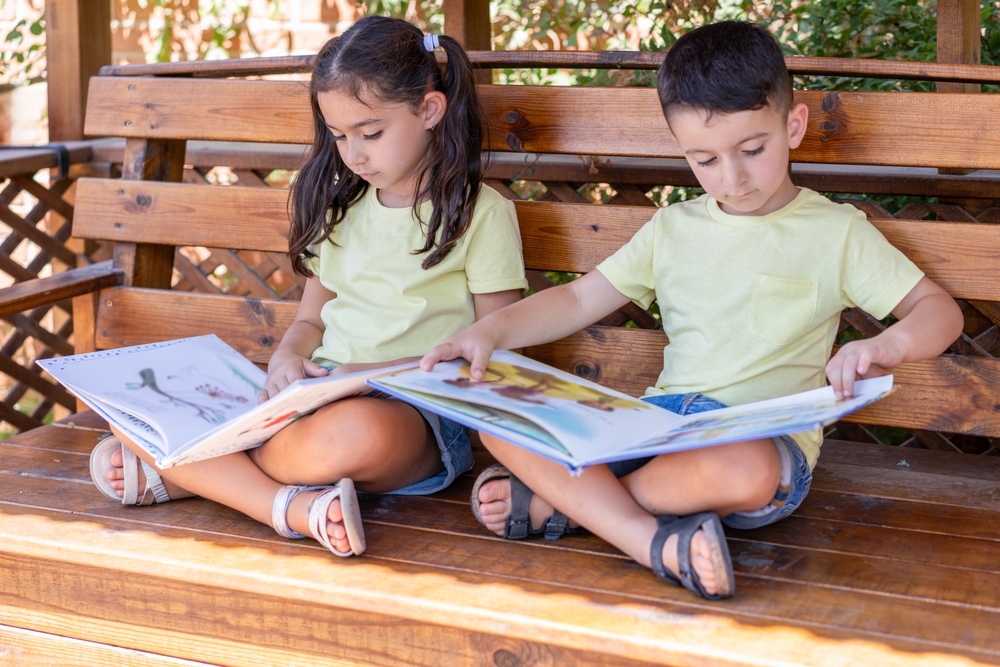
- Keep the book faucet turned on by visiting the library! Allow your child to check out books that interest them. Book choice is highly motivating for readers of all ages. Can’t make it to the library? Check out RIF’s digital library, Skybrary, for access to 100 FREE books and resources.
- Practice and reinforce skills in fun and creative ways. Headed to the beach? Why not use it as an opportunity to practice writing skills through sand writing, exploring your five senses or creating a short film? Explore RIF’s Fun at the Beach collection for free books suggestions and activities. Staying at home? RIF has great staycation resources, offering free reading enrichment to keep learning and reading at home.
- Continue learning your home language. While students who are not native English speakers may have less opportunities to practice during the summer months, there are many skills that can be reinforced in any language. Read aloud to your child in your native language to model fluent reading, point to the words to support print awareness and ask questions to encourage reflective and critical thinking. RIF has free resources available in several languages.
- Read aloud every day. The best way to continue to see progress in reading is to read regularly. Find a cozy spot and curl up with a favorite book. Read aloud to your child and help them practice reading aloud to you.
Learn more tips to encourage your child to read this summer.
Erin Bailey, Ed.D., joined Reading Is Fundamental in 2021 and currently serves as the Vice President of Literacy Programs and Research.